Image courtesy of Scryfall.com
Art Style Trends Across the MTG Timeline
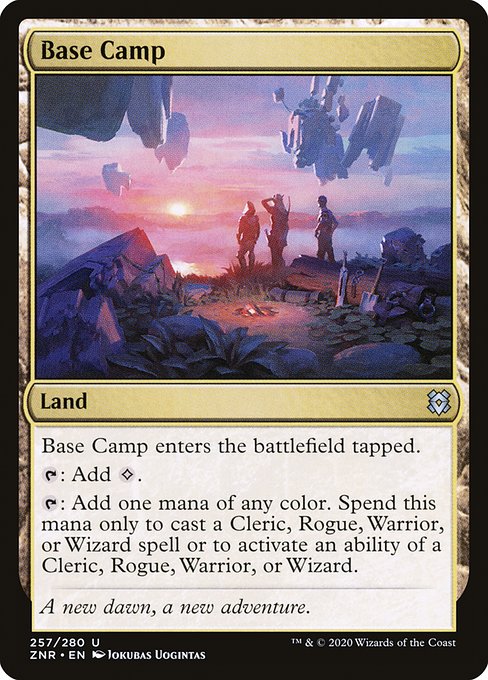
Magic: The Gathering has always been a visual time capsule, a living gallery that catalogs the shifting currents of fantasy illustration. From the 1990s’ bold brushwork to today’s polished, cinematic scenes, each set doesn’t just introduce a mechanic or a creature—it captures how players and artists imagined the multiverse at that moment. The artwork on Base Camp, a land from Zendikar Rising released in 2020, sits right in the middle of this evolutionary arc. It embodies both a sense of practical expedition and a painterly grandeur that mirrors the decade’s love affair with texture, atmosphere, and a touch of rugged realism. 🧙♂️🔥
When you look at this card’s landscape orientation, you’re not just reading a picture you’re reading a mood board for an adventurer’s journey. The painting breathes with carving light, weathered tents, and a horizon that feels both expansive and intimate. It’s a reminder that MTG art isn’t only about the spell refrains or the creature’s ferocity; it’s about the moment you imagine casting a plan from a quiet, temporary campsite before the chaos of combat erupts. The piece communicates a narrative in a single frame, and that narrative mirrors a broader shift in the 2010s and 2020s toward more cinematic, story-forward illustration. 🎨⚔️
Base Camp’s Visual Language
The Base Camp artwork leans into painterly textures and a cinematic light that feels borrowed from landscapes rather than pure fantasy illustration. You can almost hear the wind tugging at the tents as you study the image, which is exactly the kind of atmospheric approach Zendikar Rising embraced to convey exploration, preparation, and risk. The color palette—earthy browns and mossy greens with punctuated highlights—creates a grounded, tactile feel, a deliberate contrast to earlier sets’ neon or highly saturated hues. This balance—between realism and wonder—reflects a broader trend: modern MTG art aims to invite you into the scene, not simply showcase a cool creature or a dramatic spell. And for players, that invites story-driven deck-building where a land’s art hints at the vibe of the strategy you’re about to run. 🧙♂️💎
Artist Jokubas Uogintas, responsible for the piece, brings a sense of scale and weathered texture that resonates with the Zendikar block’s expeditions. It’s not just a “pretty image”; it’s a storytelling device that suggests long treks across shifting terrain, a theme that dovetails with the set’s landslide exploration mechanic and the idea that adventurers—clerics, rogues, warriors, and wizards—gather at a base before the next leap into danger. That synergy between aesthetic and mechanic is a hallmark of modern MTG art direction: the image reinforces the card’s function while enriching the deck’s narrative fabric. 🎲⚔️
Decade-by-decade Snapshots
- 1990s — The birth of the iconic fantasy look: Early MTG art emphasized bold linework, dramatic silhouettes, and hand-painted textures. The visuals favored clear, legible fantasy archetypes—dragons, knights, and sorcery—often framed to emphasize the card’s immediate action. The mood was adventurous and larger-than-life, a perfect match for a game that was discovering its own mythos in real time. 🧙♂️🔥
- 2000s — Digital dawn and more varied palettes: As digital painting tools entered studios, artists explored more dynamic angles and richer depth. We started to see skies that could glow with supernatural color and landscapes that pressed the sense of scale. The art grew more cinematic, with lighting and atmosphere becoming almost a character in their own right. The cards felt like mini-modes of a movie poster, inviting you to step into the scene. 🎨
- 2010s — A blend of painterly and photoreal cues: The middle decade saw artists pushing texture—stone surfaces, armor wear, spell effects—with a realism that still kept enough painterly flair to preserve magic’s fantasy aura. This era also experimented with composition, often placing focal elements at dramatic angles or within layered backdrops to evoke depth. The craft became a conversation between traditional technique and digital polish. 💎
- 2020s — Cinematic scope and world-building emphasis: Zendikar Rising and its contemporaries lean into expansive environments, natural light, and a sense of place that supports storytelling. The art doesn’t just illustrate a card; it invites you to imagine a whole corner of the multiverse—campfires crackling, distant cliffs hovering in air, voices of adventurers preparing for what comes next. The trend is toward immersive, narrative-first visuals that reward slower, more contemplative card evaluation. 🧭
Why art direction matters for how you play
Great MTG art does more than decorate a card; it informs your strategy and tempo. A land like Base Camp, with its tapped-entry and flexible mana ability that can generate color for Cleric, Rogue, Warrior, or Wizard spells, speaks to a philosophy of flexibility. The ability to cast multicolor spells or pay for activated abilities using mana of any color reflects a design mindset: empower players to blend archetypes without forcing a rigid color identity. In practice, that means commander decks and multi-color builds get a visual cue from the art—this is a camp for diverse travelers, a place where many paths converge. The art’s emphasis on preparation and exploration echoes the deck-building mindset: plan, gather your components, and anticipate the journey ahead. 🧙♂️🧭
Collectibility, too, rides along with art evolution. The Zendikar Rising line represents a moment when MTG’s aesthetic became as much a storytelling engine as a gameplay engine. For collectors, the interplay between rarity (Base Camp is uncommon) and the art’s mood makes certain prints feel especially immersive on a shelf or in a personal gallery. The card’s value in a deck is matched by its value as a piece of the MTG art canvas, a reminder that the multiverse isn’t static—it shifts like the terrain of Zendikar itself. ⚔️🎲
As you curate your next party-themed or multi-color build, you’ll likely find yourself drawn to the visual narrative that contemporary art direction weaves into the game. It’s not just about the mechanics; it’s about the moment you imagine within the battlefield, the camp you’ve pitched, and the stories you’ll tell when tabletop legends gather around the table. 🧙♂️
While you study the evolving visuals, you can keep your gear as safe as your deck’s integrity: consider a Slim Glossy Phone Case—built for Lexan polycarbonate—so your devices match the diligence you show at the table. Check it out here: Slim Glossy Phone Case. And if you’re curious about snagging Base Camp or similar cards, you can explore market and collector pages linked through Scryfall for fresh scans and price trends. 🧙♂️💎