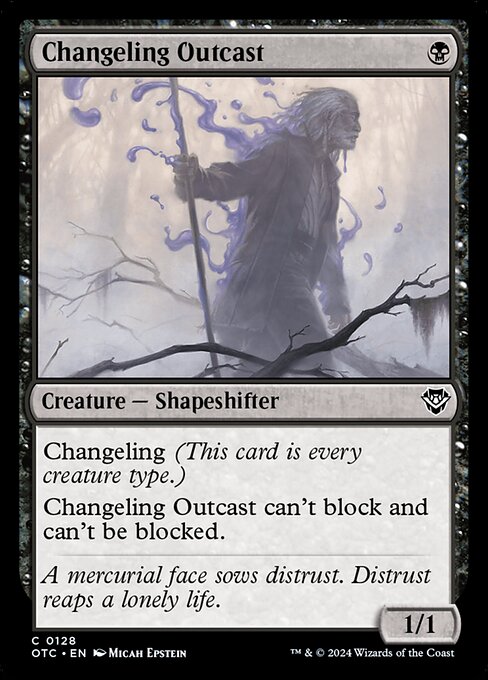
Image courtesy of Scryfall.com
When a Shape-Shifting 1/1 Drops: Community Buzz Sparks Across MTG Twitter and Reddit
The first reveal of a card as unique as Changeling Outcast always stirs the membrane between theory and practice. On release day, MTG players flocked to chatter channels with a mix of curiosity, trepidation, and memes. A card that is every creature type by its very nature invites a chorus of “What does this mean for tribal synergy?” and “How does a 1/1 with a hard-to-parse combat sentence actually dance in modern games?” The buzz wasn’t just about power—it was about possibility 🧙♂️🔥. A single mana dot of black mana cost, a shape-shifter’s signature molt, and a flavor text that quietly humbles even the most confident player: “A mercurial face sows distrust. Distrust reaps a lonely life.”
Why the buzz feels earned
Changeling Outcast sits at an intriguing crossroads in the Outlaws of Thunder Junction Commander set. Its mana cost of {B} and its 1/1 body make it accessible to virtually any black-based deck, but it’s the Changeling tag that elevates the conversation beyond a simple stats-and-bodies card. In tribal strategies, being able to count as all creature types opens a world of synergies—think of cards that care about specific creature types when they enter, attack, or combine with other effects. For instance, a Commander table filled with elves, vampires, goblins, and dragons suddenly gains a wildcard that can slot into any of those niches on a whim. The community is quick to brainstorm combos that hinge on “counting as X” for triggered abilities, buffs, or a crucial synergy during a crowded board state. The result is a delightful tension: do you build around the outcast as a pivot for tribal payoffs, or do you lean into its rogue-like limitation—an attacker that cannot block and cannot be blocked? 🧙♂️💎
“Changeling Outcast is the kind of card that makes you plan your sideboard as if it’s a spellbook—always asking, what if this one creature counts as every tribe I care about?”
Another layer of the chatter is how this card interacts with the commander format, where “ethos of the tribal” often collides with the realities of combat math. The outcast doesn’t stall or shield; it pressures from an angle that invites creative play rather than brute force. Players are drafting lists that lean into tempo, with a nod to the card’s vulnerability—being unable to block means it needs protection from removal or be positioned as a finisher in a deliberately tilt-heavy boardstate. The discussion threads are peppered with playtest anecdotes, deck-building notes, and spicy anecdotes about how a single, unassuming 1/1 creature can flip a table’s expectations into a full-blown, synergistic engine. ⚔️🎲
Flavor, Art, and the Set’s Personality
Micah Epstein’s illustration captures the mercurial essence of the card—an aura of shifting loyalties and the implied tension behind every face. The flavor text underscores the loneliness that accompanies a life spent wearing countless masks, a sentiment that resonates with players who’ve built decks around social and political maneuvering in multiplayer environments. It’s not just about power; it’s about the stories that emerge when a creature can be any type, and yet, somehow, remains stubbornly singular in its fate. The art and the writ of the card blend into a narrative about trust, deception, and the inevitable cost of being too adaptable in a world where alliances shift as swiftly as the blink of an eye 🧙♂️🎨.
From a design perspective, the Changeling mechanic is a nod to MTG’s long-running fascination with identity and utility. The Outlaws of Thunder Junction Commander set leans into eccentric, tabletop-friendly vibes—cards that fuel commander games filled with wild, thematic moments. Reactions quickly highlighted how a common rarity card can spark “how do we leverage a global creature type in a tribal meta” conversations without overpowering the format. The balance feels deliberate: accessible to new players, yet with enough nuance to keep veterans speculating on value engines and synergy webs. 🔥
Deckbuilding, Meta, and Real-World Play
In practical terms, Changeling Outcast invites you to imagine tribal shells that don’t rely exclusively on a single type. A black commander that leans into aristocrat or aristocratic themes can leverage its xxx-wide type coverage to unlock interactions that otherwise wouldn’t exist. It also acts as a potential puzzle piece in partner or token-focused builds, where a single card can unlock multiple synergies depending on the battlefield’s composition. The card’s ability—this creature can attack but can’t block and can’t be blocked—nudges players toward tempo strategies or “hit-and-run” plays that pressure opponents without overcommitting on the ground. And because it’s common, the card is approachable in multiplayer settings, where its presence can trigger unexpected political moments around who gets to attack and how the party handles a sudden influx of type-driven triggers 🧙♂️⚔️.
Price trends on collectors’ markets show a modest but steady interest, reinforcing its role as a flexible, budget-friendly inclusion for budding tribal commanders. While not a titan in terms of raw power, its story-telling appeal and cross-type potential make it a favorite for players who love the lore of shapeshifters and the micro-dramas of the table. The card’s place in the set’s identity—standout in its flavor, if not in its sheer power—helps it become a talking point across casual and competitive circles alike. 🎲💎
Practical Takeaways for Your Next Draft or Commander Night
- Consider it as a tribal enabler in a multi-type environment; leverage its Changeling ability to trigger type-based synergies you otherwise wouldn’t reach.
- Be mindful of its combat limitation: it can attack, but you’ll want protection or a plan to capitalize on the attack rather than rely on it for blocking or stalling.
- Flavor and art help it stand out in a crowded mythic-and-rares world—fun to own, fun to show off on social feeds and battle reports 🧙♂️🎨.
For fans who like to blend form with function, the card’s presence is a reminder of MTG’s playful core: a game about possibilities, personalities, and the perpetual question of who you choose to be at the moment you declare an attack. If you’re heading into a pre-release weekend or a late-night drafting session with friends, the Outlaws of Thunder Junction Commander set’s spirit is infectious, and Changeling Outcast sits at the center of that vibe. And if you want to carry a little piece of that fandom into everyday life, a stylish Neon Tough Phone Case can be a perfect sidekick—the kind of merch that travels with you as you plan your next big tabletop conquest. 🧙♂️💎
As the community continues to analyze the card’s implications, one thing is crystal: changes in tribal dynamics are rarely one-card affairs. Changeling Outcast has ignited conversations about identity, type coverage, and the ways a single, unassuming creature can pivot a game’s narrative. In the grand tradition of MTG, the reveal became a reflection of the player base itself—inventive, humorous, and always starved for a bit of strategy magic. ⚔️🎲
Curious to explore more ways to celebrate the moment? Check out the Neon Tough Phone Case and other fan-friendly gear—it’s a small way to honor the craft and the community that makes MTG so endlessly engaging.
Product: Neon Tough Phone Case — Neon Tough Phone Case