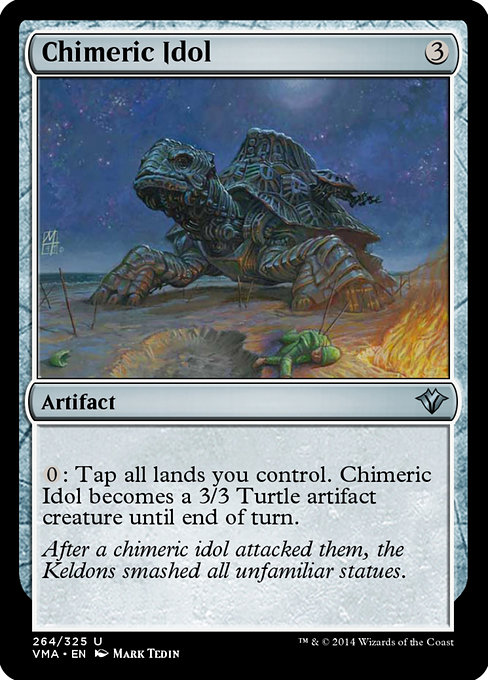
Image courtesy of Scryfall.com
Power and Toughness Ratios in MTG: A Case Study from Vintage Masters
In the grand tapestry of Magic: The Gathering, power and toughness are never just numbers on a card; they’re a language you speak with your board state. When a card hones in on a precise ratio like 3/3, it invites players to weigh tempo against raw strength, risk against reward. The artifact in question—a rare, colorless engine from Vintage Masters—turns that conversation on its head by giving you a momentary creature while demanding you surrender your land-based mana economy for the turn. It’s a playful reminder that in MTG, ratios aren’t just about how big a creature is; they’re about what you’re willing to trade to bring it to life 🧙♂️🔥💎.
Released in 2014 as part of Vintage Masters, this uncommon artifact comes with a clean, no-nonsense fate: pay three mana to unleash a transformative ability that tilts the battlefield in a single, dramatic moment. The card’s mana cost is a modest 3, but its true cost is your entire mana base for that turn. The text—"0: Tap all lands you control. This artifact becomes a 3/3 Turtle artifact creature until end of turn"—reads like a riddle wrapped in a paradox. You get a 3/3 creature for a fleeting instant, but you must first shut off your mana sources for the duration of that turn. It’s a clever design that rewards timing, rhythm, and a little bit of nerve 🧭🎲.
Dynamic Invocation: What a 3/3 Turtle Means on Turn Planning
At first glance, turning an artifact into a 3/3 creature might feel like cosmetic fanfare. But the real trick lies in how that 3/3 interacts with your land drops, your mana ramps, and your opponent’s tempo. There are two natural frames to view this card in:
- Tempo swing: On the turn you activate the ability, you temporarily sacrifice your mana production. If you can utilize that tempo swing to end the game or buy a crucial blocker, the payoff lands with surgical precision. It’s the MTG equivalent of flipping a switch and saying, “Now the plan accelerates… in a different direction.” 🧙♂️⚔️
- Surprise blocker/offense: A 3/3 created from inert material can suddenly pressure an opponent’s life total or weather a swing in combat. If your opponent taps out, you might surprise them with a sudden, decisive move—thanks to the timing window your turned-off mana affords you.
Because the card is colorless and has a dedicated Turtle creature type for that temporary moment, it also folds neatly into mono-red or colorless-focused lists that enjoy big finishers and surprise blockers. And in formats that reward creative timing—Legacy and Vintage in particular—this is exactly the kind of tool that can swing a late-game position from “almost there” to “game over.” It’s not a hurry-up engine; it’s a patient, misdirection-laden bluff that pays off in the nick of time 🕰️🎭.
Flavor, Design, and Artistry
The flavor text—“After a chimeric idol attacked them, the Keldons smashed all unfamiliar statues.”—grounds the card in a moment of lore that feels cinematic. Mark Tedin’s illustration lends a tactile sense of ancient wonder and metallic mystery, which aligns with the set’s vintage vibes. Even without explicit color, the artwork communicates a world where idols—both revered and dangerous—shape the fate of entire towns. The concept of a statue becoming animated, then turning on its own builder for a single turn, captures the playful danger that MTG’s best artifacts offer 🎨🗡️.
“After a chimeric idol attacked them, the Keldons smashed all unfamiliar statues.”
In terms of design philosophy, the card embodies the core MTG principle that power and protection often come with a price tag. The 3/3 turn-for-life moment is a narrative device as well as a mechanical one. You get a dramatic, memorable beat in exchange for giving up your future mana production for that same turn—a fair, even elegant trade that invites skilled timing and a bit of theater 🔥.
Collectibility, Value, and Set Context
As an uncommon from Vintage Masters, this card is a nod to the magic of reprints and the enduring appeal of classic artifacts. It’s printed with both nonfoil and foil finishes, highlighting its place in collector circles who chase the tactile thrill of a well-preserved vintage classic. In MTGO terms, its price impression may hover in modest ranges, with a value indicator like tix nudging around low figures, reflecting its appeal to dedicated collectors and players who enjoy niche interactions rather than raw daily staples. The rarity and the foil option combine to give it a footnote-worthy presence on the shelf and in the binder 📚💎.
For players building a nostalgia-driven cube or a Legends-and-Artifacts-centric deck, this card can be a fun, spicy add. It’s the kind of pick that signals to opponents, “I’ve got a trick up my sleeve, and it comes with a side of nostalgia.” The Vintage Masters frame, the 2015-era styling, and Mark Tedin’s signature flair all contribute to a sense of historical MTG storytelling that fans love to collect and discuss around the kitchen table or at a tournament side event 🧙♂️🎲.
Deck-Building Considerations: When and How to Play It
When you should play this artifact is as important as when you don’t. Consider these practical guidelines:
- Mana budget discipline: If you’re heavy on lands and ramp, you can afford to suspend your mana production for a turn and still flood the board with threats on the following turn. Ensure you have a plan to capitalize on the temporary 3/3—whether it’s to pressure the opponent’s life total or to blunt a big swing with a sturdy blocker. 🧙♂️
- Untap enablers: Pair the card with effects that untap lands or your mana sources to re-open your mana engine quickly. Cards that untap artifacts or lands can turn a one-turn cost into a multi-turn ramp plan, letting you weave through the board more safely 🔄🎛️.
- Opponent awareness: Don’t overcommit to the attack if your opponent has a clean answer to a 3/3 creature. Use the moment to bait or trade, and re-enter the game with a stronger follow-up thanks to your untapped resources on the next turn 🃏⚡.
- Play pattern: In slower, value-oriented decks, this artifact can be a surprising tempo tool; in more aggressive builds, it’s a fun, conditioning trick that teaches opponents to expect the unexpected 🏁🔥.
Even outside of traditional competitive frames, the card shines as a conversation piece in a themed deck, a nostalgia-fueled display piece, or a playful example of MTG’s clever balance between risk and reward. The number three—three mana, and a temporary three-power payoff—becomes a motif you can build around, turning the math into a tiny saga every time you draw it 🧩🎯.
Meanwhile, to keep the MTG conversation rolling while you plan your next big play, you may want to check out resources and gear that complement your collecting and playing hobby. For instance, if you’re looking to protect or showcase your collection on the go, consider a practical accessory like the Phone Case with Card Holder—a product designed for fans who treat MTG as a lifestyle, not just a game. It’s a small, stylish nod to the same kind of craft that makes a vintage artifact feel alive on the table. ✨ 🧙♂️🎨