Image courtesy of Scryfall.com
Exploring Desert of the Glorified Through Mixed-Media MTG Art
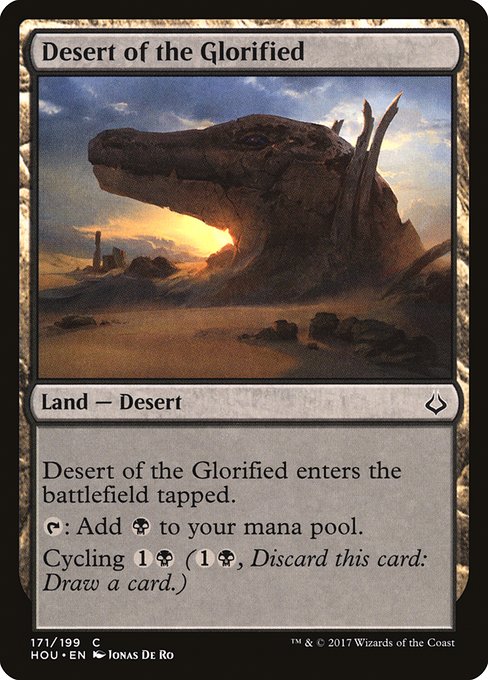
Magic: The Gathering has long invited players to read the battlefield not just in numbers but in mood. The Desert of the Glorified, a land from Hour of Devastation, stands as a striking case study in how mixed-media art—layered textures, photographic grit, and painterly flourishes—can carry the flavor of a card as vividly as its rules text. This colorless-but-black-leaning Desert enters tapped, taps for a single black mana, and even offers a cycling option that rewards deck-thinning with card draw. The result is a small but potent narrative device: a landscape that whispers that even in a barren place, black mana can assert control and cunning 🧙🔥💎⚔️.
Behind the Brush: The Art and the Artist
The card is illustrated by Jonas De Ro, whose work often blends cinematic lighting with tactile texture. Desert of the Glorified is colored by a palette that leans into desolate earth tones while letting the deep shadow play a pivotal role. In the mix-media sense, you can sense photographic textures layered with digital painting and brushwork, creating a horizon that feels both real and haunted. This approach aligns with a broader trend in MTG art where desert landscapes, ruins, and necrotic motifs are treated as more than scenery—they’re narrative engines that propel mood and set the stage for black mana’s classic themes: secrecy, sacrifice, and subtle power plays 🎨🎲.
“Deserts are quiet places where danger hides in plain sight.” That quiet becomes the canvas for mixed-media magic—textures that echo heat waves, shadows that imply unseen forces, and a composition that nudges your eye toward the cycle and the card’s hidden payoff.
Gameplay Arc: How a Desert Becomes Tempo and Draw Power
From a gameplay perspective, Desert of the Glorified is a practical example of how a land can wear multiple hats. It’s a Desert—a land type that fits neatly into the Hour of Devastation narrative where the Egyptian-inspired gods and monarchical imagery framed the set. Its ability text is elegantly economical:
- This land enters the battlefield tapped, slowing your ramp a touch but preserving your hand for what comes next.
- Tap: Add {B} to your mana pool, turning the desert into a steady source of black mana when you need it.
- Cycling {1}{B} — Discard Desert of the Glorified: Draw a card. This is the quintessential mixed-media mechanic in miniature: the card’s art hints at scarcity and the theme of turning waste into value, much like the art turns a humble desert into a black-mantled stage for clever plays.
In practice, you can lean into controlling tempo with discard or removal-heavy black strategies, knowing you’ve got a dependable way to draw into your late-game options. The cycling option also mirrors a thematic “twinned” idea—the desert can either yield black mana now or yield a card later when the moment calls for it. That duality is part of what makes the art and the mechanics feel in sync 🧙🔥.
The Mixed-Media Moment: Why This Style Resonates
Art directors and collectors alike gravitate toward mixed-media pieces when a card’s story benefits from texture and mood. The Desert of the Glorified leans into a sense of looming horizon and the austere beauty of a landscape that could be both lifeless and alive with hidden power. The result is a piece that feels earned—the kind of image that rewards a second glance, inviting fans to notice the subtle skeletons of the frame and the hint of glimmering black mana gathering just beneath the surface. For many players, that tactile, almost tactilely real feel makes the desert more than a utility land—it becomes a character in a larger saga 🎨⚔️.
Lore, Theme, and Collectibility: A Card with Quiet Depth
Hour of Devastation is steeped in the Amonkhet-inspired lore—a world where the dying breath of an ancient pantheon leaves ruins and miraculous perils in its wake. Desert of the Glorified fits neatly into that tapestry as a humble land that still carries a whisper of power. It’s a common rarity, with a foil version that often attracts collectors who chase nostalgic or meta-relevant foil staples. While its market value sits in the modest range (nonfoil around a few tenths of a dollar and foil often a touch higher), the card’s real value to players lies in its flexibility and its art’s enduring charm. The visual language—sand, shadow, and the idea of a black mana gateway in a parched realm—continues to resonate with fans who love the long-form storytelling of MTG’s multiverse 🧙🔥💎.
For modern players building black-focused archetypes or desert-themed decks, this card offers a reliable colorless entry point for mana acceleration that can pivot into late-game draws. Its Cycling ability is a nod to deck-thinning strategies that reward you for seeing cards you don’t need in the moment, then trading them for options that bring victory closer in a game that often hinges on tempo and resource management 🎲.
Design, Aesthetics, and the Collector’s Eye
Designers have long understood that art can carry as much narrative weight as the card’s text. Desert of the Glorified demonstrates how a single image—evocative, textured, and quietly powerful—can elevate a mundane land into a storytelling device. The piece’s calm color scheme and the balance between open space and foreboding detail mirror the card’s mechanical restraint: no flashy mana cost, no complicated lines on the card face, just a straightforward option that carries a world of flavor when you pair it with the right deck and the right moment.
If you’re curious about diving deeper into the aesthetic, you can explore more on Scryfall’s card pages or peruse EDHREC for real-world deck builds that feature Desert of the Glorified. And if you’re a collector who loves the tactile side of MTG, you’ll appreciate how the foil variant catches light differently, turning this otherwise quiet desert into a small, shimmering oasis in a rainbow of card stock.
Curious minds and avid players alike may also enjoy a tangible cross-promo connection in the real world. If you’re looking to carry a bit of MTG-inspired flavor into your daily wear, the neon phone case with a card holder—MagSafe compatible and designed for on-the-go play—offers a modern riff on the same obsession with mixed-media flair. The product page is a quick tap away, inviting you to blend fandom with everyday style 🧙🔥💎.