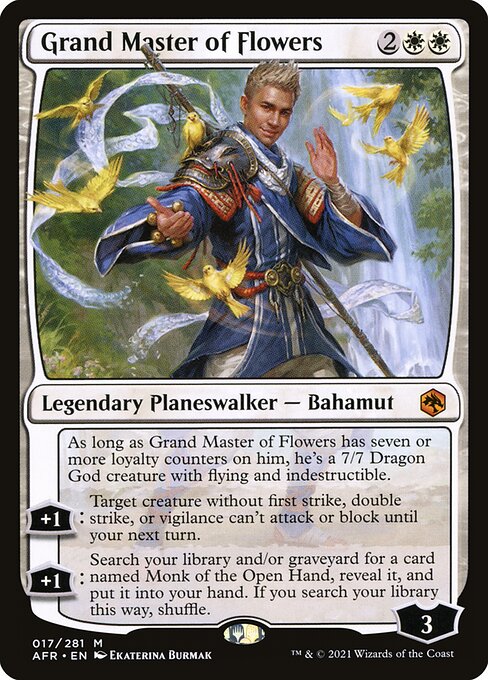
Image courtesy of Scryfall.com
Homages to Fantasy Art Classics: Adventures in the Forgotten Realms Meets MTG’s Planeswalker Aesthetic
If you’ve ever marveled at how Magic: The Gathering can thread classic fantasy imagery into modern gameplay, this Adventures in the Forgotten Realms card does it with bold flair. The set’s white-aligned planeswalker takes a page from dragon lore and temple courtyards alike, blending high-concept myth with practical in-game leverage. It’s a reminder that MTG’s art direction isn’t just about pretty pictures; it’s a linguistic tool that signals what this card is capable of on the battlefield and in your binder as a collector 🧙🔥💎.
A Dragon God in White: Flavor, Myth, and Frame
From the frame to the flavor, this card nods to the legendary dragon-god archetypes that fantasy fans adore. The artwork, courtesy of Ekaterina Burmak, drenches the legendary with a crystalline white bloom that feels almost ceremonial—a visual echo of monastic order meeting draconic majesty. Set in the Adventures in the Forgotten Realms expansion, released in 2021, the card sits at the crossroads of high fantasy and spellcraft. The mana cost of 2}{W}{W} signals a mid-game planeswalker that wants to be built around, not brute-forced into the battlefield. In the broader MTG mythos, the idea of a noble dragon-god who embodies both flight and invincibility is a timeless trope, and this card weathered that weathered myth into a playable, modern chassis ⚔️🎨.
Mechanical Arcs: Loyalty, Abilities, and the Dragon Form
At a base loyalty of 3, this legendary Planeswalker begins with a steady hand on the wheel. Its loyalty abilities are clean, instructive, and very much in the spirit of the AFR design philosophy: repetition and choice matter. The first ability (+1) is a strategic tempo tool: Target creature without first strike, double strike, or vigilance can't attack or block until your next turn. It’s not a hard lockdown, but it buys you a crucial window to stabilize or set up your next push, a classic “dim the lights and breathe easy” MTG moment that can turn the tide in mid-range matches 🧙🔥.
The second ability (+1) adds a library-and-graveyard fetch mini-game: Search your library and/or graveyard for a card named Monk of the Open Hand, reveal it, and put it into your hand. If you search your library this way, shuffle. This is a nod to card synergy and cycle time, inviting you to consider two-card combinatorics and the broader strategy of assembling a small toolkit centered around the Open Hand monk. It’s a wink to the classic “monk-fueled” flavor in white devotion decks, while also providing the practical tutor effect a control or midrange deck can appreciate. The combination of a loyalty tax and a fetch card creates a layered puzzle for players to solve as the game unfolds 🧩⚔️.
As long as seven or more loyalty counters adorns this planeswalker, it morphs into a 7/7 Dragon God with flying and indestructible. That transformation is not just a stat line; it’s a thematic crescendo. You’re allowed to ride the board toward a sky-dominant finisher, the kind of moment that makes players grin and say, “Yes, we’re in a dragon’s party now.” The card’s final identity—Dragon God in a white frame—feels like a fantasy art homage that leans into the legendary lineage of dragons while keeping a white-aligned control and stax sensibility intact 🐉✨.
Design Intent, Card Power, and Format Footprint
From a design perspective, the card exemplifies the AFR ethos: a compact mana cost, clear paths to board presence, and a flavorful kicker tucked behind a couple of clean, repeatable abilities. The white color identity emphasizes control, board presence, and a methodical approach—yet the dragon-guardian mode gives you a big, hard capstone if the situation allows for a longer, more dramatic game. The card is legal in Historic, Timeless, Gladiator, Pioneer, Modern, Legacy, and Commander, among other formats, which speaks to its broad applicability and the kind of card a commander player might want on the battlefield during a multi-hour session with friends or rivals 🎲⚔️.
The AFR set status also matters from a collector’s perspective. The card is printed in both foil and non-foil, with a few market fluctuations typical of mythic rares. The artwork, the rarity, and the set-specific foil availability contribute to its appeal for players who want a focal piece in their display shelf or binder. Scryfall’s price snapshot shows a modest market presence—an approachable entry point for a mythic that merges classic fantasy aesthetics with a modern, planewalking engine. The interplay between the card’s art, its dragon-boosted finisher, and its monk-fetching tutor creates a narrative arc you can actually draft around, which is the magic of a well-painted set piece 🧙🔥💎.
Flavorful Ties, Lore, and Collector Value
Ekaterina Burmak’s illustration anchors this card in a timeless fantasy tradition—the flowering archways and mythic guardians that populate the best DAWN OF DRAGONS and epic-adventure texts. The “Bahamut” reference nods to the dragon-god mythos that resonates across MTG’s broader mythos and D&D crossovers, while the “Monk of the Open Hand” linkage hints at a broader world-building tapestry where order, discipline, and ancient magic intersect. For collectors, this piece is intriguing not only for its rarity and foil options but for its role as a narrative bridge—an artifact you can point to when explaining how MTG reimagines fantasy art classics within a strategic framework 🧙🔥🎨.
In terms of value, the card’s price points are characteristic of mythics from AFR: a modest entry price in non-foil form, a more premium foil, and a sliver of market activity that tends to rise as players chase specific commanders and combos. For enthusiasts who like to discuss card economics, there’s a neat conversation to be had about how an elegant piece of fantasy art can drive both gameplay interest and collection desire—all while keeping the game approachable for new players who are exploring white’s toolkit and its dragon-infused possibilities 💎⚔️.
Bringing Fantasy Art into Your MTG Life
The best crossover cards are the ones that spark a story alongside a reliable engine. This AFR planeswalker does not merely sit on the battlefield; it invites you to think about how a dragon-god can emerge from a field of flowers, and how a monk’s search can ripple outward into your hand, drawing the future into the present. It’s a playful, ambitious concept that speaks to the core desire of MTG fans: to blend legend, strategy, and a touch of mythic theater in every match. If you’re chasing a centerpiece for your white-infused command roster or simply want a gorgeous artwork to anchor a display shelf, this card earns its keep with style and substance 🧙🔥🎲.
For fans who want to enjoy the tactile side of the hobby with a touch of practical gear, you can keep your desk ready for long sessions with a high-quality accessory that complements the table presence of a dragon-guarding planeswalker. And if you’re exploring ways to celebrate your favorite fantasy art moments while weaving in your favorite MTG playstyle, consider picking up a few AFR pieces to anchor your next set of games. The mix of classic fantasy vibes and modern game design is why this card remains a favorite among art lovers and deck builders alike 🎨⚔️.