Image courtesy of Scryfall.com
Real-World Myths Behind MTG Inspiration
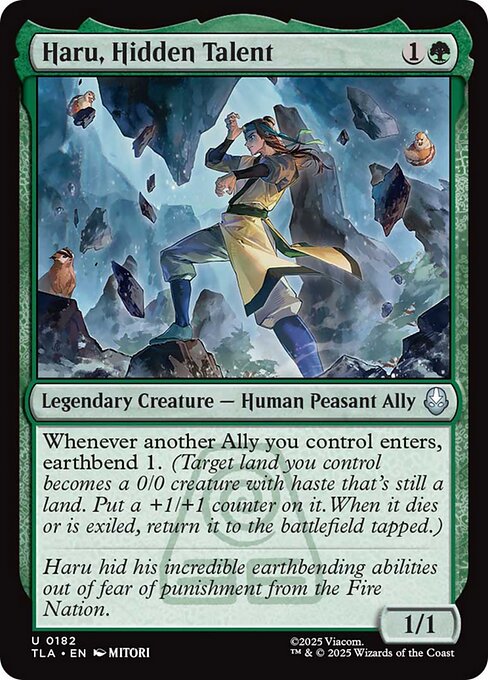
Haru, Hidden Talent steps onto the battlefield as a green-tinted whisper of myth in the Avatar: The Last Airbender crossover. His existence in the Avatar-themed MTG set is a loving nod to the earth’s enduring myths—the kind of tales that tell us a quiet power can tremble the very ground we stand on. In Haru’s world, earthbending isn’t just a flashy display of strength; it’s a discipline steeped in cultural memory, myth, and the stubborn stubbornness of stone. This card pulls from real-world earth-associated lore—from ancient earth deities to earth-centered martial arts—and channels that resonance into a mechanics-first, flavor-rich moment in green. 🧙♂️🔥💎
Consider the texture of myth in the card’s flavor: “Haru hid his incredible earthbending abilities out of fear of punishment from the Fire Nation.” The Fire Nation represents a classic mythic antagonist—the tyrant who polices power, much like many folklore villains who fear a hidden force that could topple a tyrant’s iron grip. In myth, the earth is not merely soil; it is a sentient, patient force—capable of awakening, shaping, and protecting. Haru’s story translates that potency into the world of MTG through a single, elegant trigger: every time an Ally you control enters, earthbend 1. The concept of earthbending—taking a mundane land and briefly transforming it into something alive, quick, and dangerous—echoes myths of living earth, from Gaia’s dominion over soil and seed to earth talismans in East Asian folk traditions. It is a bridge between legend and legend-in-the-making, a reminder that green’s strength often lies in turning the ground beneath your feet into an ally of surprise and resilience. ⚔️🎨
Earth and Myth: Threads You Can See in Haru’s Design
Avatar’s earthbenders owe much to martial-arts aesthetics and mythic symbolism. The Avatar universe distills real-world mythic motifs into an element-driven magic system: earth stands for resilience, history, and the stubborn beauty of the world’s solid truth. Haru’s card text—“earthbend 1” targeting a land you control—reads like a mythic rite: a land awakens, grows a spine, and becomes a temporary guardian that fights for you. In lore terms, you might imagine Tu Di Gong, the Earth God of Chinese folklore, or other earth spirits blessing a humble field until it becomes a cornerstone of your battlefield. The card’s watermarked Earth Kingdom and the green mana cost anchor this mythic vibe in the real world’s ecological and cultural imagination. 🧙♂️🔥
“Earth remembers.” That simple line captures Haru’s essence: a quiet, patient force that awaits the right moment to reveal its strength.
Artistically, Mitori brings that mood to life with earthy tones, a grounded silhouette, and an expression that hints at harboring a secret power—much like many mythic heroes who hide their gifts until destiny calls. The Avatar: The Last Airbender branding isn’t just cosmetic; it signals a deliberate weaving of mythic storytelling into a collectible card that invites both lore-sleuths and tournament tacticians to explore its green horizons. The Earth Kingdom watermark is more than garnish; it’s a visual cue that the ground you walk on can become a shield, a weapon, and a story all at once. 💎⚔️
Gameplay: Allies, Earthbends, and the Green Path
From a gameplay perspective, Haru sits at an intriguing intersection of Ally tribal potential and land-labored tempo. The card’s static mana cost of {1}{G} makes it a friendly early-drop that can set up longer-term board plans. The true spice comes when you think about what an “Ally you control enters” trigger means in practical terms. Each new Ally entry can unleash another Earthbend, which might turn a ramp land into a temporary creature that pressures the opponent or sacs to fuel another effect later in the game. In a deck built around Allies, Haru rewards you for building wide and leveraging ETB (enter the battlefield) synergies. 🧙♂️🔥
- Board presence with a twist: Each ally entering creates a ripple of earthbends that can transform lands into threats or engines. This makes Haru a steady source of value in a creature-heavy green deck, especially when you sequence lands and Allies to maximize returns.
- Land threat density: The 0/0 land that becomes a 1/1 with +1/+1 counter and haste is a temporary threat that can trade up or enable combat math you wouldn’t expect from a simple land drop.
- Synergy with +1/+1 counters: The mechanism of “put a +1/+1 counter on it” scales with green’s strengths—counters, value engines, and the classic “stick around and grow” playstyle.
- Commander and casual fun: In formats where Allies exist, Haru shines as a flexible, meme-friendly piece that also carries genuine value in creature-friendly green shells.
In terms of lore integration, Haru’s earthbend theme complements a broader Avatar-inspired narrative where earth and air, fire and water collide on a grand stage. The flavor text ties Haru’s hidden potential to a common MTG theme: the quiet, patient power that surfaces when the moment is right. The card’s uncommon rarity and Earth Kingdom watermark make it a memorable centerpiece for a green Commander or a casual Ally deck—where strategy is as much about storytelling as about turn-by-turn optimization. 🧙♂️🎲
Art, Collectibility, and Cultural Resonance
Haru’s art is a study in balance—earthy textures meet a hero-wary posture, with green hues signaling growth, life, and resilience. The Avatar: The Last Airbender crossover adds a layer of cross-cultural resonance that MTG collectors often chase: the sense that a card can be more than a line of text—it can be a doorway into a different world’s mythos. The card’s rarity (uncommon) and its modern-frame presentation (frame 2015, black border) place it squarely in the collectible category for players who value both playability and lore. The “Earth Kingdom” watermark isn’t just a cameo; it’s a deliberate design cue that signals Haru’s place in a broader mythic ecosystem. 🔥💎
For collectors and players who love the intersection of pop culture, myth, and strategy, Haru is a standout. It’s a reminder that MTG’s green stories can be deeply rooted in mythic archetypes while still delivering fresh, functional gameplay. The card’s Universes Beyond collaboration adds a layer of cross-media appeal, inviting fans of Avatar to discover a new dimension of Magic’s multiverse. If you’re chasing synergy, you’ll find Haru’s concept appealing not only for its mechanical curiosity but for the way it honors a mythic tradition that’s as old as storytelling itself. 🧙♂️🎨
Practical Deckbuilding Touches
As you sketch a deck around Haru, consider how Ally tribal shells, landfall themes, and +1/+1 counter synergies can blend. While Haru’s triggers originate from Allies entering, you can build around “ETB” effects that accelerate your board state, bridge to bigger plays, or set up lethal combat windows. Don’t shy away from ramp packages in green—mana dorks, Cultivate-type accelerants, and tools that maximize land usefulness will help Haru shine without overstaying its welcome. The key is tempo: Haru rewards you for thoughtful timing, not just sheer board presence. And yes, you can lean into the mythic undercurrent with cards that evoke earth’s guardians or ancient stone sentinels—the kind of silhouettes that pair nicely with Haru’s narrative and mechanical mood. 🧙♂️⚔️
As you explore Haru’s place in the multiverse, you might also want a comfortable workspace to draft and strategize—perhaps a Neon Foot-Shaped Mouse Pad with Ergonomic Memory Foam Wrist Rest to keep your nerves steady while you plan earthbends and Ally synergies. It’s a tongue-in-cheek nod to how a tiny tool can help you stay focused while your fields of green take shape. For details, check the product link below.