Image courtesy of Scryfall.com
Fun vs Competition in MTG: a closer look through Kederekt Parasite
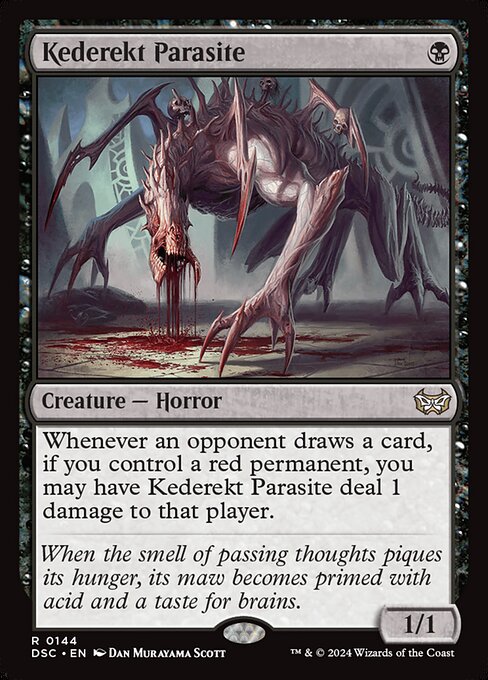
Magic: The Gathering has always lived at the crossroads of joy and rivalry. Some cards lean into big, cinematic moments that spark joy and storytelling, while others push players to sharpen their decision trees and optimize every turn. Kederekt Parasite sits happily in the space between those poles. A rare Horror from the Duskmourn: House of Horror Commander set, it costs a single black mana and presents a modest 1/1 body with a purpose: punish drawn cards in opponents’ hands—provided you’ve got a red permanent watching your back. 🧙♂️🔥💎
What the card does, in plain terms
On paper, the card is simple: “Whenever an opponent draws a card, if you control a red permanent, you may have this creature deal 1 damage to that player.” That means the real cleverness isn’t just that it punishes card draw; it hinges on you maintaining a red permanent on the battlefield. In multiplayer Commander, where wheels and draw engines are common, Parasite turns those moments into tiny, reactive combat damage. It’s not a game-ending blow, but it is reliable pressure that keeps everyone honest as the table flexes for card advantage. Color identity and timing matter here: you need red on your side, so a Rakdos or Grixis flavor often makes the most sense. 🎲
The creature itself is a 1/1 for {B}, a deliberately efficient silhouette that invites you to pair it with larger strategies rather than rely on raw power. Its rarity—rare—reflects its design intention: a political tool rather than a standalone beatdown threat. The flavor text, too, hints at its appetite for minds: “When the smell of passing thoughts piques its hunger, its maw becomes primed with acid and a taste for brains.” That line isn’t just atmosphere; it signals the parasite’s role as a tongue-in-cheek mind-game catalyst. 🎨
Fun vs competition: navigating the social dynamics
- Casual, social play: Parasite’s trigger can become a shared joke or a source of playful negotiation. Opponents may try to curb wide drawing or tilt hostilities toward the table’s most draw-happy players, turning dinners and game nights into a living, breathing negotiation. The “you must have a red permanent” clause adds a wink of political poetry: you’re signaling a deckbuilding choice while inviting friends to anticipate your plays. 🧙♂️
- Competitive edge: In a more cutthroat environment, Parasite is a quiet, persistent pressure point. Wheel effects (like Wheel of Fortune or Windfall) become higher-stakes moments that test who can balance risk, tempo, and life totals. You’ll want to protect your board state, manage fetches and removal, and leverage those moments when the table overloads with card draw. The net effect: a small but meaningful sprint toward a more deliberate, value-based race rather than a pure draw-go spree. ⚔️
- Design and flavor synergy: The Duskmourn setting leans into horror-movie aesthetics, and Parasite’s art and text reinforce a theme where knowledge and thought are dangerous sweets to be tasted at a cost. It’s a perfect example of how a single card can influence table tone, from suspense to outright mischief. The artwork by Dan Murayama Scott adds a tactile, almost cinematic menace that MTG fans won’t forget. 🎨
Deck-building notes: making the most of a clever constraint
Because you must control a red permanent for the trigger to fire, your deck is effectively asking a simple question: what red permanents do I want to have on the battlefield when I need them? Here are practical guidelines for weaving this card into a fun-but-focused strategy:
- Red permanents as enablers: Include reliable red permanents—preferably on-board sources like red planeswalkers, enchantments, or artifacts that count as red permanents. This doesn’t have to be flashy; a well-timed Chandra or a red creature on defense can unlock Parasite’s edge without overshadowing your core plan. 🔥
- Draw that creates shared risk: In multiplayer, wheels and draw spells naturally invite reaction. Use Parasite to frame those moments as tactical opportunities rather than pure chaos. Remember, you’re not just hurting a single player—you’re shaping the draw rhythm for everyone at the table. 🎲
- Mitigate and maximize: Pair Parasite with protective or disruption options so you don’t become the table’s focus of harassment. Counterspells, bounce, or stax-lite approaches can let you keep the pressure while maintaining a reasonable game state for friends and foes alike. ⚔️
- Casual political play: Propose informal pacts around one of the table’s biggest draw drivers. If two opponents lean into heavy draw, you can broker a friendly bargain to manage the pace—making the experience memorable without derailing it. 🧙♂️
Flavor, design, and collector sense
The card’s lore sits within Duskmourn’s horror-forward vibe. The idea of a brain-hungry parasite that thrives on thought and memory aligns with the anti-heroic, chiaroscuro mood of the set. The flavor text and the creature’s stat line create a compact storytelling moment: a creature’s appetite is as much about what you draw as what you play. Collectors appreciate the set’s commander focus and the reprint dynamic—Duskmourn Commander cards like this one speak to players who love multiplayer politics, mythic-level storytelling, and a sidestep into clever, restricted interactions. The card’s EDHREC rank sits around mid-range, reflecting its utility without dominating the table—perfect for those who enjoy thoughtful play without turning the game into a pure grind. The card’s price point, while modest, signals its value as a well-designed utility pick in black-dominated strategies. 💎
From a design perspective: what makes this work?
At its core, the Parasite is a micro-lesson in gating power behind a clean, memorable constraint. The cost is cheap, the body is small, but the trigger can become a tempo swing if used correctly. That’s a hallmark of solid card design: a minimal card that rewards smart planning and social play. The requirement of a red permanent nudges players toward a particular color-pairing mindset (often Rakdos or Grixis), which in turn shapes the table dynamics in a flow that’s both tense and entertaining. And if you’re a fan of the horror-tinged aesthetic of Duskmourn, the artwork and flavor text land with satisfying, thematic resonance. 🧙♂️🔥
Where to see it on the table and beyond
In practical terms, you’ll most often encounter Kederekt Parasite in Commander circles where draw effects are a staple, and where political bargains are part of the social contract. It’s a card that rewards your patience and your table’s trust—turning a simple creature into a lever for narrative tension. If you’re curious about picking up a copy for your next table, it sits in the rare tier in the Duskmourn Commander suite, and its non-foil print is accessible for a broad range of collectors and players alike. The card’s modern- and legacy-friendly status means you can explore it in a variety of formats, though its home remains the epic flavor of EDH and its kin. 🧙♂️⚔️
For those who like to blend a touch of real-world gadgetry with tabletop greatness, consider pairing your new playmat with a comfortable, quality surface. A thoughtful desk setup can make those late-night sessions feel legendary—plus it keeps your focus sharp as you navigate those draw-heavy turns. If you’re in the mood to upgrade your workspace, take a look at an ergonomic memory foam mouse pad with a wrist rest—the kind designed to shoulder the long sessions with you. Learn more here. 🧙♂️🎲
Key takeaways — this card shines when you embrace the social chess of multiplayer MTG, using a simple condition (a red permanent on your side) to turn draw engines into tactical pressure points. It’s a thoughtful example of how a single, well-timed trigger can shape table mood, alliance formation, and the pace of a game, all while staying true to a compact black mana cost and a flavorful horror vibe. 🧙♂️🔥