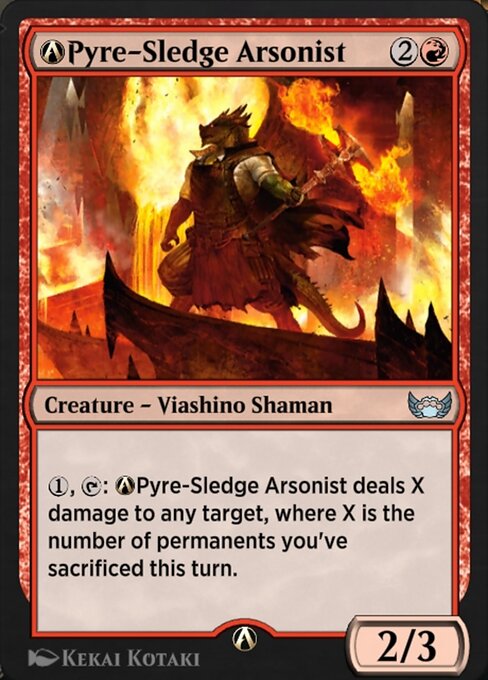
Image courtesy of Scryfall.com
Rarity Symbols Unveiled: A-Pyre-Sledge Arsonist Design
In the sprawling tapestry of Streets of New Capenna, MTG designers tucked a subtle but telling language into every card: rarity indicators. If you’ve ever squinted at a card’s symbol beside the mana cost or beneath the art, you’ve already felt the heartbeat of rarity echoing through the set. For A-Pyre-Sledge Arsonist, a crimson-era creature from the digital-first arc of SoNC, that language speaks in bright red heat and silvered icons, guiding deck builders and collectors alike toward the power level and scarcity of this particular piece. 🧙🔥 The card’s red energy and lizard-shaman flavor push you toward aggressive, tempo-rich plays, but the rarity cue keeps expectations grounded—this one lands as an uncommon gem in Arena’s digital sandbox, with a design that rewards savvy sacrifice play and careful timing. ⚔️
Rarity in MTG isn’t just about how hard you can stroke your collection’s ego; it’s a design constraint and a balance dial. Common cards tend to be more broadly useful but less powerful, while rare and mythic cards push toward splashier effects, often requiring more precise play or more aggressive deck strategies. The color and presentation of the set symbol is the most visible clue on the card itself. In Streets of New Capenna, the expansion symbol’s hue signals rarity to players at a glance—a small badge of distinction that instantly communicates "this is a tiered pick" during draft or while scanning a binder. 💎 Each rarity band also aligns with the card’s overall design tension: how many copies exist in a deck, how easily you can access the effect, and how the card interacts with the broader strategic themes of the set. 🎨
Meet the card: stats, text, and the spark of red ingenuity
- Mana cost: {2}{R} — a tidy three-mana commitment that sits comfortably in many red builds, inviting early action and midgame pressure. 🧙♂️
- Type: Creature — Lizard Shaman — a flavor blend that evokes quick, cunning outbursts and practical, streetwise tricks.
- Power/Toughness: 2/3 — solid enough to trade with a range of early blockers, while staying nimble in the curve of a red tempo plan.
- Oracle text: {1}, {T}: Pyre-Sledge Arsonist deals X damage to any target, where X is the number of permanents you've sacrificed this turn. 🔥
- Rarity: Uncommon — a classification echoed by the card’s silver-ish set symbol color and placement on the SoNC printline. Arena supports the digital version of this rarity with faithful balance and approachable accessibility. ⚔️
- Artist: Kekai Kotaki — a painter whose work often infuses urban mythos with bold, kinetic energy, helping the art connect the card’s theme to your battlefield ambitions. 🎨
- Set: Streets of New Capenna (snc) — a block known for its crime-family atmosphere and gimmick-laden cards that reward clever mana curves and sacrifice-centric arcs. 🧩
The ability on this card is a textbook example of how rarity and power converge in modern design. You can tap this creature to push damage, but the real payoff comes when you’ve engineered a turn full of sacrifices. The more permanents you’ve sacrificed, the bigger the X on the damage spike. That interplay between cost and payoff aligns with red’s classic tempo-slayer posture but leans into a sacrifice motif that’s reinforced by other cards in the set. It’s design that rewards planning and careful sequencing, not just raw numbers. 🎲
Rarity as a design language: how the indicator informs play and perception
- Visual cue: The rarity indicator is often conveyed by the expansion symbol color and adjacent print details. For uncommon cards, you’ll see a silver or light-colored symbol that distinguishes them from the black (common) and gold/orange (rare/mythic) counterparts. This quick visual cue helps you sort your deck-building decisions on the fly, whether you’re drafting or building on the kitchen table. 💎
- Balance and power ceiling: Uncommons like this Arsonist sit at a sweet spot—powerful enough to see play in the right shells, yet not so overpowering that they warp the metagame. The rarity approach, paired with the sacrifice-centric cost, nudges you toward incremental, tactical plays rather than straight-line aggression. The result is a more nuanced, channeled red archetype that still feels explosive when the moment is right. 🧙🔥
- Digital vs. physical presentation: In digital formats such as Arena, rarity remains visible, legible, and functional. The card’s arena print is designed to preserve the same balance and readability you’d expect from a physical booster, ensuring that the rarity language remains consistent across mediums. This consistency matters when players are trading, strategizing, or tuning a deck across formats. 🎯
Strategic takeaways: building around sacrifice and red resilience
From a gameplay perspective, A-Pyre-Sledge Arsonist rewards you for orchestrating a turn where you sacrifice a handful of permanents, whether through sac outlets, reflectively triggered lands, or token boards you’ve generated. The payoff—X damage—scales with your willingness to commit resources for greater burn. In practice, you’ll want to pair this card with other red creatures and sacrifice outlets that can crank out a quick stream of sacrifices. Cards like these often enable a two-step tempo: deploy early pressure, then unleash a decisive, high-impact burn blast. The synergy writes a story in temperature and timing, not just numbers. And in a meta where players chase big, swingy spells, a well-timed Pyre-Sledge Arsonist can be the spark that tilts the board in your favor. 🎲⚔️
Lore, art, and the cultural heartbeat of a red-labeled clue
Kotaki’s artwork for this card emphasizes motion and heat, a visual metaphor for the relentless, improvisational nature of the red color pie. The Arsonist’s silhouette hints at a street-smart tactician who can improvise chaos into opportunity—an archetype that resonates with Capenna’s underworld energy. The scarcity marker on an uncommon card like this reinforces the sense that players are trading a controlled risk for a potential payoff, a theme that sits well with the criminal-empire vibe of the set. And when you see the miniature flame motif in the iconography, you’re reminded that MTG design often uses color and symbol as a language that transcends words. 🧙🔥💎
Collectibility, value, and how rarity shapes your collection mindset
In collector culture, rares and uncommons tell two stories at once: how often a card might appear in packs and how versatile its effect is in many decks. Though this A-Pyre-Sledge Arsonist is digital-only in Arena and listed as nonfoil in its print, its uncommon status carries a particular charm—both as a playable piece and as a mark of the set’s design philosophy. The A-118 collector number sits among a spectrum of cards that together build a coherent Sacrifice-and-Red engine within SoNC’s thematic frame. If you’re chasing a cohesive, thematically rich red midrange or tempo shell, this card’s rarity communicates a clear signal: you’ll want to invest some strategic thought into how many sacrifices you’re willing to assemble in a given turn and what priorities you’re setting for damage versus board presence. 💼🎨
As you’m crafting your decklists and your personal MTG library, consider how rarity indicators inform your expectations, your trades, and your play style. It’s not just about the best card in the best deck—it’s about the best card in the right slot, and how that rarity badge nudges you toward smarter decisions. And if you’re enjoying the tactile side of collecting, you can still appreciate the digital-first ecosystem for its accessibility, speed, and platform-specific balance. 🧙♂️
For those who enjoy blending MTG passion with everyday gear, a little cross-promotion never hurts. If you’re looking for a reliable, stylish upgrade for your everyday carry, check out this handy accessory: a Clear Silicone Phone Case — Slim & Durable with Open Ports that keeps your tech as cool as your red-blue sleeves during a tight MTG moment. It’s the kind of practical kit that makes a long night of drafting feel just that much smoother. Stay ready for the next big draw. 🎲