Image courtesy of Scryfall.com
AI-Generated Art Trends in MTG
Across the Magic: The Gathering landscape, the last few years have seen a dramatic shift in how card art is imagined, drafted, and refined. The rise of AI-assisted workflows—diffusion models, neural upscaling, and style transfer experiments—has turned artists and collectors into co-pilots riding the same wave. The result is a growing curiosity about how AI can unlock new atmospheres, textures, and moods without sacrificing the heart of MTG’s lore. 🧙🔥 From the gleam of a prismatic aura to the grit of a ruin-laden landscape, the balance between human touch and machine collaboration is a conversation worth following closely, particularly when a classic white Spirit like Ruin Ghost enters the conversation. 💎⚔️🎨
The Card as a Lens: Ruin Ghost in Worldwake
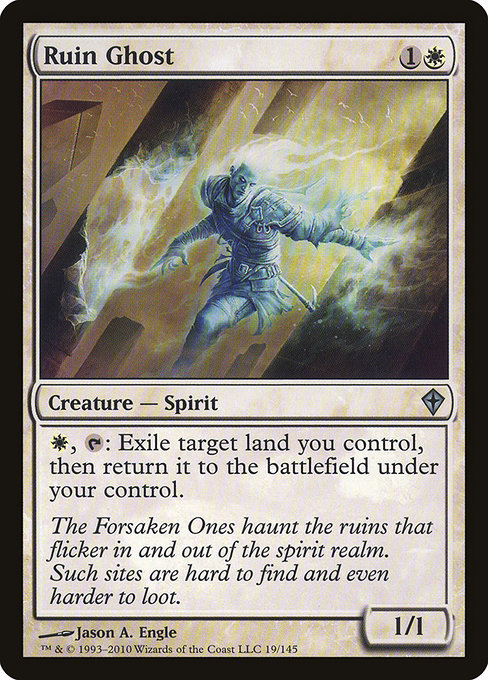
Ruin Ghost is a small but telling slice of Worldwake’s character. This Creature — Spirit costs {1}{W} and wears a modest 1/1 stat line, yet its utility lies in the node it creates within a white-control or land-reuse strategy. Its ability—“{W}, {T}: Exile target land you control, then return it to the battlefield under your control.”—is a miniature parable about reusing space, tempo, and timing. In a game where land drops and land ETB effects can swing the course of a match, this tiny flicker becomes a brushstroke of strategic nuance. And in an era where AI-assisted art is increasingly shaping how we visualize these moments, the image of Ruin Ghost serves as a focal point: a pale, vigilant presence hovering between ruin and renewal. 🧙🔥
- Set and rarity: Worldwake, an uncommon from 2010, with the Worldwake aesthetic leaning toward soft, misty arcs and elemental textures.
- Mana and color identity: White mana (W); the card’s quiet restraint mirrors the discipline of white-aligned strategies and ambushes—not flashy, but relentlessly practical. 💎
- Flavor and lore: The flavor text—“The Forsaken Ones haunt the ruins that flicker in and out of the spirit realm. Such sites are hard to find and even harder to loot.”—reads like a field report from a haunted excavation, a perfect fit for modern AI-driven tease-and-reveal art that lingers on atmosphere. 🎨
- Illustration and artist: Jason A. Engle’s work anchors the card visually, reminding us how a single frame can carry both nostalgia and forward-looking experimentation.
- Market perception: With an of-the-era price footprint around USD 0.35 for non-foil and USD 3.79 for foil, Ruin Ghost sits in the lane where collectible value meets gameplay utility. This dynamic is precisely where AI-assisted art trends spark debate among collectors and players alike. 💎
“AI is a new kind of collaborator—one that can expand the palette, but the heartbeat remains human.”
In the broader MTG art conversation, Ruin Ghost exemplifies a bridge between traditional illustration and the contemporary push toward AI-influenced textures and composition. Imagine the pale glow behind a spectral figure, the way light bends around ruined arches, or how mist threads its way through a battlefield. These are not just pretty pictures; they are storytelling devices. When AI helps concept artists iterate faster, it can free them to chase bolder narrative moments, while still honoring the established language of MTG—the iconography of white, the balance of symbols, and the emotional weight of a well-timed memory in a card frame. 🧙🔥
Design, Discovery, and the AI Dialogue
One of the most compelling facets of AI-assisted art is how it prompts designers to rethink constraints. In white-centric designs, there’s a premium on clarity, contrast, and legibility, especially when a card sits on the table next to a hundred others. An AI-assisted workflow can experiment with subtle shifts in lighting, texture, or negative space around Ruin Ghost’s silhouette—without drifting away from the card’s readable identity. The diffusion-era technique can generate variations that preserve core elements (the 1/1 Spirit shape, the soft white-phosphor glow, the ethereal aura) while exploring different mood palettes—dusty ruins, radiant sanctums, or arcane wards. The art subculture around MTG embraces this blend of fidelity and invention, much to the delight of players who collect or merely admire the imagery. 🎲
From a mechanical standpoint, Ruin Ghost’s ability interacts with lands in a way that feels almost ritualistic: exile a land you control, then re-enter it under your control, as if it’s stepping back through a portal to a more favorable moment. This type of play pattern has long inspired players to build land-centric archetypes or to generate tempo through subtle re-usage of resources. AI-driven art trends amplify that sense of control and timing by rendering scenes that emphasize the fleeting, hopeful moments when a player’s plan re-emerges from the shadows. Thematically, it’s a perfect match: ruins that flicker in and out of the spirit realm, becoming battlegrounds for temporary dominion. ⚔️
Collectors, Culture, and Cross-Promo Potential
As AI-assisted artistry gains traction, sets like Worldwake provide a nostalgic lens through which fans explore new aesthetic directions. The card’s foil and non-foil finishes, along with its uncommon rarity, create a sweet spot for savvy collectors who admire both gameplay utility and visual storytelling. The ongoing dialogue around AI and authenticity also nudges buyers to consider provenance, edition history, and print runs—a conversation that becomes more nuanced with each generation of tool-assisted design. The Ruin Ghost artwork, with its calm, spectral presence, invites a conversation about how future pieces might balance AI-assisted experimentation with the human touch that makes MTG art iconic. 💎🎨
For players who want to pair a card with a physical workspace flourish, a subtle nod to the card’s themes can be found in real-world products that celebrate this era of artistry. The cross-promotional synergy between MTG collectibles and design-oriented gear—like the neon rectangular mouse pad linked below—offers a playful way to curate a gamer’s desk that feels as immersive as a favorite playmat. The aesthetic conversation isn’t limited to the battlefield; it spills into the workspaces where fans draft strategies, stream, and swap stories about their latest pulls. 🧙🔥
As AI tools mature, the MTG art community will continue to refine what efficiency, creativity, and respect for lore look like in practice. The Ruin Ghost card stands as a compact snapshot: a simple white mana commitment, a thoughtful ability, and a haunting image that nods to the past while inviting experimentation in the future. Whether you’re a casual commander enthusiast or a tournament grinder, the implications for art, design, and culture are worth tracking closely. And yes—the toy soldier on the table may be gone, but the ghostly ruin—like the best cards—keeps returning, again and again, with a brighter glow each time. 🧙🔥💎
To complement this evolving aesthetic conversation, consider adding a touch of neon-inspired flair to your desk setup—perfect for late-night deckbuilding or weekend brawl sessions. The product below is the kind of cross-promotional find that makes a night of MTG planning feel a little more magical.