Image courtesy of Scryfall.com
Seasonal MTG Market Trends: A Prickleboar Pricing Case Study
Seasonal rhythms aren’t just about holidays and vacation schedules—they echo through the MTG marketplace in subtle, sometimes surprising ways. For a card like Prickleboar, a red common from Magic Origins, those rhythms are amplified by its availability, reprint risk, and the steady appetite of players who love efficient, on-theme red creatures. 🧙🔥 As fans, we watch price waves as a sign of how decks evolve, how sets age, and how nostalgia for a beloved card design can surface in surprising ways. The result is a blend of math, memory, and a touch of luck, like rolling a die while drafting with friends who’ve saved their packs for a rainy day. 💎⚔️
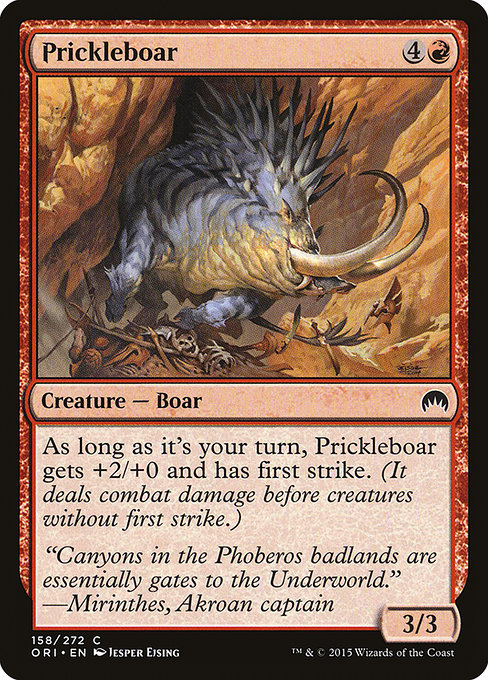
Quick snapshot: what this card is and where it came from
- Name: Prickleboar
- Mana cost: {4}{R} (cmc 5)
- Type: Creature — Boar
- Power/Toughness: 3/3
- Rarity: Common
- Set: Magic Origins (ORI), Core set, released 2015-07-17
- Oracle text: During your turn, this creature gets +2/+0 and has first strike. (It deals combat damage before creatures without first strike.)
- Flavor text: "Canyons in the Phoberos badlands are essentially gates to the Underworld." —Mirinthes, Akroan captain
As a red common from a core-set era where design leaned toward bold, practical creatures, Prickleboar is a card that’s easy to slot into casual and modern-red builds. It rewards a purely tempo-based plan: attack with a threat that hits hard on your turn, then punch through with first strike. The flavor and the art—credit to Jesper Ejsing—bring a touch of mythic grit to a card that many players use as a flex piece in lower-stakes formats. 🎨
Seasonality and the pricing lens
At first glance, Prickleboar sits in the “typical cheap commone” category: USD price around 0.05 for non-foil copies and EUR around 0.04, with foil European prices floating a bit higher at about 0.30. That combination — cheap non-foil, modest foil — is a classic marker of a card that lives primarily in casual and budget formats rather than as a staple in competitive builds. The market tends to see less dramatic spikes for such cards, but seasonal cycles still apply: price gently drifts during the year, with occasional upticks around previews, retirements of older reprint fears, or spikes tied to popular deck archetypes that briefly seek low-cost, high-utility red creatures. 🧙🔥
Why does a card like Prickleboar care about the seasons? The answer sits at the intersection of supply, demand, and the timing of reprints. Non-rotating formats (like Modern and Legacy) remain a stubborn, evergreen audience for affordable red creatures that can slot into a variety of builds. Meanwhile, reprint risk for a card from a 2015 core set tends to be relatively low in the near term, which tempers dramatic price swings. The seasonal rhythm—amid holidays, new set previews, and tournament cycles—can nudge prices up or down by a few cents, but the overall trajectory for a common like this is typically flat or slowly drifting downward as print runs stabilize. Still, the occasional foil spike in some regions points to collector demand punching above wholesale expectations, a reminder that even commons can surprise you in the right market moment. ⚔️
What drives these fluctuations in practice
In Modern and Legacy, Prickleboar can appear in red aggro shells, especially in budget or midrange lines. High demand in niche decks can push prices up slightly, even for commons. - Print runs and reprints: Core-sets from mid-2010s have not seen universal reprint pressure in recent years, which keeps non-foil copies cheap while foil prints in some markets maintain a touch more value.
- Foil vs non-foil dynamics: The data shows foil prices exist but aren’t dominant for a common. Foils tend to fetch a premium in tight markets or near buying seasons, yet many players gravitate toward non-foil, lowering average prices for the base copy.
Card circulation patterns around reprint windows or bulk buyouts can create brief, localized price jumps as stores adjust their stock and players search for bargains before a new set arrives.
The design philosophy behind Prickleboar—and why it matters for price memory
Prickleboar exemplifies a design choice that MTG has long valued: a strong, turn-specific tempo boost that rewards players who plan their attack window. Its text—granted bold first strike on your turn—embraces the idea that timing is a tool as sharp as any sword. The card’s art and flavor text contribute to a narrative that resonates with players: a harsh, mythic landscape where even a boar can be a fearsome, strategic ally when the moment is right. This blend of playability and flavor is part of why the card remains a familiar name in casual discussions and price charts alike. 🎲
“Canyons in the Phoberos badlands are essentially gates to the Underworld.” —Mirinthes, Akroan captain
Prickleboar in the modern market conversation
For collectors and players tracking seasonal trends, Prickleboar offers a lab-friendly example: a common with reliable utility, a foil option with limited but real appeal, and a stable spot in price charts. Those who watch market curves for common red creatures can compare Prickleboar with cousins from other sets to understand how print runs and reprint risk shape micro-trends. In the grand mosaic of MTG pricing, it’s a reminder that not every card needs to be a mythic to teach us about supply, demand, and how the next year’s meta might reshape even the most modest of our binders. 🧙🔥💎
How to approach Prickleboar in your collection strategy
- Keep a pulse on foil availability in EUR markets; the foil price signal can be an early warning of collector interest even when base copies remain near pennies.
- In Modern/Legacy conversations, watch for red aggro bubbling in budget-friendly lists; a few new players trying out the archetype can nudge demand, especially near regional events.
- Use price history as a guide for trades: don’t overpay for a card with a tiny profit margin, but consider it if you’re building a casual red deck and want a reliable early-game threat with first strike synergy.
- Consider bundling Prickleboar with other Magic Origins staples in budget bundles to appeal to new players and commander enthusiasts alike.
If you’re exploring capstone buys for a weekend pop-in open playgroup or drafting night, a few non-foil Prickleboars can be a friendly staple to add to your budget deck. The easy-to-calculate reality is this: a common that trades at a few pennies will rarely break your budget, but it can break your opponent’s tempo when you drop it on the right turn. That tempo magic is what keeps these little boars in rotation in casual decks and in the conversations of price-watchers alike. 🧙🔥🎲
Want to pair your MTG hobby with something practical off the table? Check out the MAGSAFE Card Holder for phones and cards—an unobtrusive companion for game nights and game-day planning alike. It’s a neat cross-promo touch that fits the lifestyle of many players who travel with their decks and notes. The product page is just a click away: