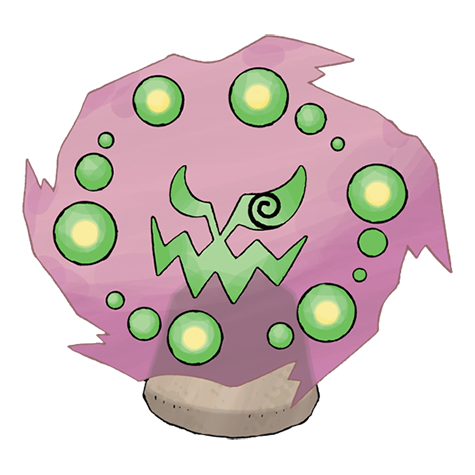
Image courtesy of PokeAPI (official artwork)
Origins, Lore, and the No-Evolution Paradox
Spiritomb emerges from a haunting crossroads where legend meets battleground. Built on a macabre premise—108 spirits bound to a keystone—it represents a sentient confluence of memories, curses, and unending grievances. The result is a single Ghost/Dark presence with a weathered personality and a hunger for resolve. This origin story is more than flavor text: it explains why Spiritomb feels like a relic that refuses to rest, a sentinel guarding secrets from ages past ⚡🪨.
The dual nature of its typing—Ghost and Dark—fragments the ethereal into something both eerie and calculating. In lore terms, that blend is a natural fit for a being that thrives on intangible pressure: it can loom over a battlefield, absorbing attention while its history gnaws at the margins of a trainer’s plan. This makes Spiritomb a memorable puzzle for teams—a creature that rewards patience, momentum, and careful targeting of its weaknesses and resistances ✨🎒.
Stat Line at a Glance
- HP: 50
- Attack: 92
- Defense: 108
- Special Attack: 92
- Special Defense: 108
- Speed: 35
In practical terms, those numbers paint a clear picture: Spiritomb is built to weather hits rather than melt faces with raw speed. Its Defense and Special Defense are both sky-high at 108, signaling sturdy bulk against a broad swath of threats. With a modest HP pool and a relatively slow pace, Spiritomb benefits from position, timing, and teammates that can weather the mid-game tempo swings of a battle. The Attack and Special Attack of 92 suggest it can punch back with meaningful force, even if it isn’t rushing the finish line on the first turn 🛡️🔥.
Battle Outlook: Typing, Bulk, and Strategic Ink
Spiritomb’s Ghost/Dark combination grants it some natural immunities and resistances that shape how you deploy it. Notably, Ghost typing provides an immunity to Normal and Fighting moves—an unusual perk that lets it shrug off common physical threats. The Dark side adds a layer of menace, often translating to defensive-minded play that punishes outright brute force and forces opponents to think twice before committing powerful, blunt hits 🧭⚔️.
Because its Speed is one of Spiritomb’s lower traits, you’ll typically want to leverage its bulk to absorb a hit and reply with a calculated strike. In team battles, Spiritomb excels as a pivoting anchor—one that can buy time for teammates to set up or for safer rounds of pressure to accumulate. It’s the kind of Pokémon that rewards the attentive trainer who plans for the long game rather than the flashiest, fastest exchanges.
Be mindful of Fairy-type threats, which exploit the Dark side of Spiritomb’s typing. Fairy moves can carve through its defenses more efficiently than many other common threats, so team composition and switch timing become important factors when Spiritomb is on the field. The beauty of Spiritomb, though, lies in how its bulk and typing interact with the rest of the squad: it invites a strategic tapestry where teammates cover each other’s gaps and capitalize on diverse openings 🌊🪨.
Lore Notes: The 108 Souls and the Keystone Bond
The romance of its name is rooted in its lore: Spiritomb is said to be formed when 108 souls become bound to a keystone. This binding ritual is the fulcrum of its existence, turning what might be scattered whispers into a cohesive, albeit grudging, consciousness. The keystone acts like a prison-and-fountain of power, giving Spiritomb its current form and a perpetual urge to test the resolve of those it encounters. The concept blends nicely with the idea of ruins, curses, and ancient sites—places where stories linger long after the people who told them have faded 🗿🔮.
“Bound spirits don’t just haunt. They endure.”
From a flavor perspective, the name Spiritomb is a tidy portmanteau of Spirit and Tomb, signaling both the ethereal heritage and the sealed fate of its 108 souls. This blend of storytelling and design helps players remember that there’s more to this Pokémon than raw statistics. It invites a sense of nostalgia for old ruins, long-held legends, and the idea that some histories are best faced with steady hands and a cool head 🌙✨.
Habitat, Encounters, and Thematic Use
In the broader Pokémon mythos, Spiritomb is often associated with haunted or ruined locales—areas that echo with whispered histories and the weight of what once was. Those vibes translate into in-game encounters as a reminder: some of the most interesting battlers aren’t the flashiest; they’re the ones that carry a mood, a story, and a plan to survive the late-game pressure. If you’re building a team around lore-friendly themes, Spiritomb can anchor a spooky, hulking presence that teammates rely on to absorb risk while the story unfolds ⚡🎭.
Team-Building Tips: Making Spiritomb Work
- Shield Spiritomb from Fairy-type pressure when possible, or pair it with teammates that can handle Fairy counters so it can stay on the field longer.
- Use Spiritomb to stretch the pace of a match: it’s well-suited to soaking hits and forcing slower, more deliberate plays from the opponent.
- Complement it with partners that cover its lower mobility and help manage entry hazards and pursuit-style pressure from faster foes.
For players chasing a theme-conscious squad, Spiritomb is a compact embodiment of lore meeting battlegrounds. It reminds us that a well-built team isn’t just a collection of numbers—it’s a narrative you enact on the grid, with your favorite legends standing shoulder to shoulder while the 108 souls keep watch from the shadows ⚔️🌌.