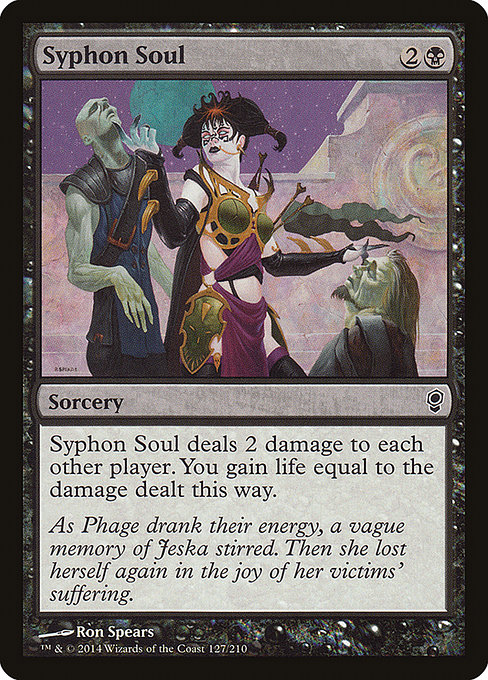
Image courtesy of Scryfall.com
Syphon Soul and the Ethics of Speculation in MTG Finance
In the grand tapestry of Magic: The Gathering, a card’s power is rarely just about the numbers on the sheet. It’s about how those numbers ripple through a game, a format, and yes—an economy that stretches from casual kitchen tables to competitive online marketplaces. The card in question is a humble black sorcery from the Conspiracy set—an inexpensive three-mana spell that reads: “Syphon Soul deals 2 damage to each other player. You gain life equal to the damage dealt this way.” It’s a stark reminder that even a low-cost spell can create big, ethically charged waves when the stakes move beyond the battlefield into the realm of MTG finance 🧙🔥💎.
First, a quick primer on the card itself for context: this Diplomatic Doom meets Lifegain package is a black mana spell (2 and a Black), with a mana value of 3. It’s colored identity is Black, and it’s classified as a Sorcery. In the Conspiracy set, designed as a draft innovation experience, you’re often drafting in unusual, multiplayer-friendly spaces where politics, timing, and deck-building strategy collide in entertaining ways. Flavor text aside, the card is a common rarity in CNS, with foils seen but not overshadowing the nonfoil print. The card’s price profile—roughly 0.19 USD in nonfoil form and around 0.49 USD for a foil—reflects its role as a value pick rather than a chase mythic. Those numbers matter when we talk about speculation: a card that’s cheap to pick up today could, in the right circumstances, grow in price if demand spikes or if it becomes a must-have in a spicy budget Eldrazi or lifegain shell. But the real question is: should we speculate on something that is both widely available and mechanically public, or is speculation in MTG finance something best treated with restraint and a healthy dose of skepticism? 🧙🔥
“As Phage drank their energy, a vague memory of Jeska stirred. Then she lost herself again in the joy of her victims' suffering.”
The card’s text itself invites a vivid mental model. In multiplayer formats, you’re hitting every other player for 2 damage and then soaking up life equal to that damage. That lifegain can be quite meaningful in long, grindy games—especially when you’re managing life totals across multiple opponents who are trying to outlast each other. The dual nature of damage and lifegain creates a classic paradox: you’re investing in hurting others while padding your own life cushion. It’s a great reminder of why card design matters in MTG finance, too. A spell that looks modest on the surface can become a linchpin in a deck’s engine, spurring demand among players who are chasing lifegain strategies or turn-after-turn stalemates that end with dramatic swings. ⚔️🎨
Ethical ripples in a speculative market
Speculation in MTG finance can be a slippery slope. When a card like this is cheap and widely available, the temptation for collectors and investors to hoard or artificially inflate its apparent value is real. The historical pattern is simple: if a card becomes suddenly relevant in a popular archetype—perhaps in a Commander deck that values lifegain triggers or a fun, chaotic Conspiracy draft environment—supply may not catch up with demand. In such moments, the ethics of speculation come into sharper relief:
- Accessibility vs. profitability: A volatile market can price out new players who want to participate in casual or budget builds. When a card’s price spikes, it’s no longer just a game piece—it’s a barrier to entry, which rubs against the spirit of MTG as a social hobby.
- Reprint risk and market timing: CNS-era cards have a built-in reprint risk. If a rerun lands, prices can melt away as quickly as they rose. Savvy buyers know to weigh potential future reprints against immediate play value, a balancing act that’s central to ethical speculation.
- Speculation as storytelling or exploitation: Some investors treat cards as “digital stock,” chasing a quick flip. Others see MTG as a narrative—lore, flavor, deck-building strategy—and choose to invest in their local metas or communities. The latter aligns more closely with the collaborative spirit of table-playing games.
From a design and culture perspective, the CNS era’s Conspiracy line emphasizes social play and uncertainty. The ethics of speculation, then, aren’t just about numbers—they’re about how we sustain a healthy ecosystem where players at all budget levels can participate, experiment, and enjoy the game together. That means recognizing that a card’s value is contingent on format trends, player communities, and the broader health of the market. When we treat speculation responsibly, we keep MTG vibrant for everyone—from the longtime collector to the new player who’s saving up for their first mana base 💎⚔️.
Deck builders often weigh this card as a budget lifegain engine in casual Commander tables or as a spicy add to a black-centric combo shell in casual to semi-competitive spaces. Its common rarity makes it accessible, while its potential to swing life totals and provoke political plays keeps it relevant—even as tightening economic conditions push players to consider every purchase more carefully. The modern MTG landscape rewards curiosity and prudent risk management: if you’re evaluating whether to invest in copies of a card, ask whether the card’s utility in formats you actually play justifies the cost, and whether you’re prepared for price volatility that could stretch into weeks or months. 🧙♀️💫
Practical takeaways for fans and financiers alike
- Focus on play value before market value. If a card has a clear, repeatable role in decks you enjoy building or playing, you’ll derive value regardless of price fluctuations.
- Set a personal budget ceiling for speculation. Treat MTG investments like a hobby fund—only what you’re comfortable losing, and diversify across cards with different archetypes or formats.
- Keep an eye on reprint risk. CNS-era cards, especially those that aren’t chase rares, can swing dramatically if Wizards of the Coast revisits the Conspiracy concept or introduces similar draft-friendly formats.
- Share knowledge, not hype. Community discussions about card strategy, format health, and price trends help demystify the market and keep it accessible for everyone.
As you map out your next drafting night or casual Commander session, consider how your purchases align with your playstyle and your table’s vibe. And if you’re looking to power through long drafting marathons with a bit of flair, you might enjoy a neon glow-up for your desk. This could be your moment to pair thoughtful deck-building with a tactile, tactilely satisfying accessory—the kind of combo that makes late-game topdecks feel almost cinematic. If you’re in the mood for a bright upgrade, check out the Neon Gaming Mouse Pad—an energizing addition to any battle station.