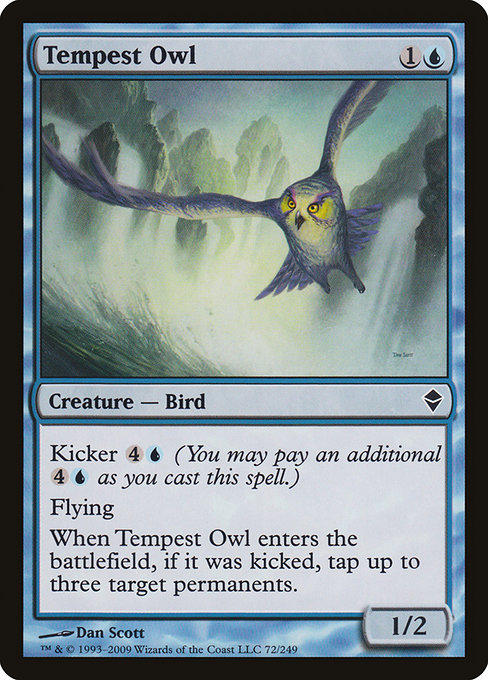
Image courtesy of Scryfall.com
Tempest Owl: a blue tempo beacon from Zendikar lands in the metagame spotlight 🧙🔥
Blue has always loved to bend conditions, to tilt the board and whisper the tempo into opponents’ plans. Tempest Owl lands with a quiet purpose: a {1}{U} flier that awakens the deck’s gears when you decide to push the button with its kicker. At its core, this common creature is not a heavyweight finisher, but a nimble disruptor with a multi-step plan. The moment you decide to pay the kicker, you’re not just paying for another body—you’re paying for a potential three-for-one tempo swing that can stall, disrupt, and tilt the game in your favor. That dynamic—low mana investment, high impact if you invest in the trick—packs a distinct flavor that blue players have tracked for years 🎲⚔️.
Understanding the card’s core: cost, body, and kicker payoff
- Mana cost: {1}{U} — a lightweight pulse that fits neatly into early-game blue decks.
- Stat line: 1/2 flying — not a beater, but a reliable aerial pressure and a sturdy blocker that travels well in tempo-centric games.
- Kicker: {4}{U} — the real engine behind Tempest Owl. If you choose to pay the kicker, the card’s ETB trigger becomes a much bigger threat, converting a modest 2-mana tempo creature into a potential multi-permanent disruption engine.
- ETB ability: When this creature enters, if it was kicked, tap up to three target permanents. This is where the card earns its keep: it can stall opposing mana rocks, fetch lands, or other troublesome noncreatures that threaten to accelerate out of control.
In play, that means you’re not just fishing for a single advantage—you’re orchestrating a controlled dismantling of your opponent’s tempo. It’s the classic blue puzzle: you invest more mana for a bigger payoff, and you set the pace of the game with careful taps and patient draws. The elegance here is twofold: first, the flying body provides inevitability in the air if unanswered; second, the ability to disable up to three targets with a single elevated investment creates the sort of memorable swing that sticks with players long after the game ends 🧙♂️💎.
Metagame forecasting: where Tempest Owl fits post-release
Looking at the broader landscape after a Zendikar print, Tempest Owl whispers into the metagame rather than shouts. In formats where it’s legal—namely Modern and some eternal-leaning formats—it’s best leveraged in tempo and control shells that prize card quality, disruption, and the ability to end games before a slower archetype can set up shop. In Standard at the time of release, Tempest Owl isn’t legal, but the lessons it teaches—how a small, efficient flyer with a powerful kicker can warp a game state—translate into the kinds of blue strategies that reappear round after round 🧭.
- Tempo-rich blue control: Tempest Owl thrives when paired with countermagic, bounce effects, and cheap cantrips that keep you drawing toward the kicker payoff. The key isn’t just tapping permanents; it’s forcing your opponent to spend on protection while you plan your next move, whether that’s a clocking draw engine or a direct answer to a problematic threat.
- Disruption as a tempo engine: By tapping three permanents, you deny the opponent the exact resources they need for a turn: a mana source, a threat, or a key mana rock. This is the sort of interaction that can snowball into a win, especially when followed by follow-up pressure or a cleared board state of your choosing.
- Resource denial in delayed formats: In formats where long games are common, Tempo Owl’s effect can stall combo turns or slow midrange development long enough to buy the kind of card advantage engines blue decks crave. In essence, it’s a versatile disruptor that rewards precise timing and patient play.
For collectors and players thinking about value, Tempest Owl’s power lies less in raw stats and more in the memory of what a single well-timed kick can do. The card’s rarity—common—means it’s accessible, and its foil variant gives collectors a little extra spark if you’re chasing shiny versions. In a market where “quality over quantity” often wins the day, a blue flyer with a dynamic kicker becomes a talking point in trade discussions and local metas alike 🧙🔥💎.
Flavor, art, and the creative team behind Tempest Owl
The Zend set brought a stormy, adventurous vibe to the table, and Tempest Owl embodies that go-fast, go-slow tension in a single card. The art by Dan Murayama Scott captures a swift, keen-eyed messenger of the tempest—an emblem of the set’s sunlit storms and floating horizons. That visual storytelling matters in a world where a card’s first impression often outlives its statistical niche. The creature’s blue color identity and the kicker mechanic together tell a little saga: sometimes you pay a premium to turn the tide, but even the cheaper version of the spell can be enough when you’re racing to stabilize a dangerous board state 🎨⚔️.
Economics, price, and long-tail value
Tempest Owl sits in a price spectrum that’s approachable for budget-minded players, with foil variants offering a touch more collectability. Current pricing sits in the low-cent range for nonfoil copies, and a bit more for foils, which keeps it within reach for those who want to explore a tempo-centric blue shell without breaking the bank. The long-tail value for a common card in the Modern ecosystem isn’t about chasing megastars; it’s about what the card enables—flexible archetypes, fun combos, and the occasional, memorable play that becomes legend in a local game night 🧙♂️🎲.
As you draft, brew, or brew-night with Tempest Owl, you’re not just playing a card—you’re rehearsing the tempo dance that blue decks have perfected across eras. The kicker adds a layer of strategic depth that invites thoughtful sequencing and timing. Will you pay the extra mana to unlock a three-permanent tap, or will you settle for a sturdy 1/2 flier that applies pressure while you shape the later game? Either way, Tempest Owl invites players to lean into the rhythm of a storm and let the tempo carry them forward 🌊🧭.
And if you’re curious about how to blend your love for Magic with a practical upgrade in daily life, consider a product pairing that keeps you organized on the go—like the handy Phone Case with Card Holder that keeps your essentials secure on your next event. It’s a small nod to the same sense of clever utility that Tempest Owl embodies in game days.