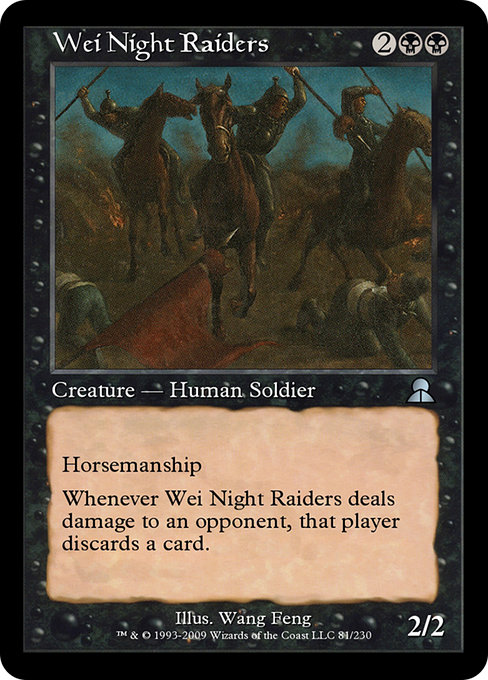
Image courtesy of Scryfall.com
Collaborations between artists and designers
In the Magic multiverse, every card is the product of a conversation that spans time, talent, and intention. When designers sketch the blueprint for a game piece and artists translate that vision into pigment and line, you get a bridge between eras—an artifact that feels both freshly minted and eternally familiar. This collaborative ethos shines brightest when you peek behind the curtain at reprints and modern commissions alike, where contemporary aesthetics meet retro mechanics in a gleam of coins and curiosity. 🧙🔥💎
Behind the collaboration: artist and designer workflow
Long before a card enters a set’s printed form, a design brief lays out what the card should accomplish in gameplay, while the artist crafts imagery that invites players to read the story at a glance. In Masters Edition III, the partnership between designer intent and Wang Feng’s artistry is especially evident: a cost of {2}{B}{B}, a compact body, and a haunting moment captured in the frame. The artist’s interpretation breathes life into a mechanic that might otherwise feel dry on the page. The result is a portrait of a factionive night raider—one that your eye recognizes as a character before your brain processes the rules text. This is the magic of collaboration: it rewards players who notice the alignment between mood, lore, and function. 🎨⚔️
Card snapshot: mechanics and flavor
The creature is a Human Soldier with horsemanship, a nod to classic, era-spanning design where the battlefield backdrop matters as much as the numbers on the card. With a mana cost of {2}{B}{B} and a sturdy 2/2 body, this uncommon reprint from Masters Edition III is built for the long, patient game—where timing and terrain determine who rides away with a win. The ability—“Whenever this creature deals damage to an opponent, that player discards a card”—turns damage into pressure control, a thematic echo of stealthy night raids that fits the Wei motif and signals a strong late-game throne room for control-leaning tactics. Horsemanship, while not as ubiquitous as flying or trample in contemporary sets, creates a distinctive interaction: it makes blocking feel like a chess match, where only the right riders can stand against your alley of night-bound attackers. This layering of mechanics with a specific culture-inspired flavor is a prime example of how designers and artists weave meaning into the fabric of the card. 🧭
Artwork and lore: the art as a bridge between eras
Wang Feng’s hand adds a shadowed, cinematic silhouette to the Me3 print run, reinforcing the sense of a nocturnal raid—quiet, precise, and ominous. The card name itself evokes a Wei flavor from classic literature and history, and the art anchors that vibe in a modern card frame. For collectors and players, this is more than a mere reprint; it’s a bridge linking the late-1990s design sensibilities with contemporary art direction. The result is a piece that satisfies the nostalgia of longtime fans while inviting new players to explore the deeper lore of knightly factions operating under the cover of night. The collaboration texture is palpable: you can feel the designer’s intent in the card text and the artist’s intent in the mood of the illustration, both working in harmony to tell a story that’s greater than its parts. 🎲🎭
“Art and design together aren’t just about making something look cool; they’re about shaping the way you play, think, and remember a moment in the multiverse.”
Playstyle and deckbuilding ideas
In practice, this card shines in environments where disruption and resource denial loom large. If you’re building around Horsemanship or leveraging discard as a strategy, this creature gives you a reliable engine to pressure opponents while remaining a tough blocker in certain matchups. Here are a few routes to explore in a modern-leaning retro deck or a casual EDH build:
Pair with disruption and hand-attack methods. When the creature lands damage, you tax the opponent’s resources, accelerating their path to fatigue and overwhelmed options. - Night raid theme: Lean into a theme deck that embraces stealthy, nocturnal threats. Include other horsemanship creatures or retro-era cards that reward evasive play and attrition wins.
- Discard synergy: Combine with cards that reward or punish discard effects, turning each hit into a deeper question of timing and control.
In Commander, your table might encounter this in a cunning, black-centered strategy where you set the tempo with tap-down control and late-game finishers. Its resilience comes from the dual appeal of retro flavor and a straightforward, punishing effect that scales as the game stretches on. And yes, the nostalgia factor is real—this is the kind of card that makes you grin at the thought of old-school tables while still appreciating modern deckbuilding depth. 🧙♂️⚔️
Collectors, value, and cultural footprint
While Masters Edition III is reprint-focused and not a Standard staple, its appeal is undeniable to collectors who crave historical accuracy and art-forward design. The rarity is uncommon, and for those who chase the EDHREC metric, this card sits in a niche but meaningful place—ranked around the 24,929th among EDH rec cards—representing a willingness to explore older mechanics in a modern setting. The fact that it’s legal in Legacy, Vintage, Commander, and other eternal formats only adds to its staying power as a conversation piece and a strategic tool. Its foil option, while less accessible, adds a splash of prestige for players who like their mana gems with a little gloss. The collaboration behind the card—artist Wang Feng pairing with the Masters Edition III design team—embodies MTG’s broader cultural footprint: a game that respects its roots while inviting fresh interpretation. 💎
Looking for more cross-cultural magic?
Collaborations between artists and designers aren’t limited to a single set or era. Each collaboration reveals a template: a shared language where color palettes, line work, and mechanical intent meld into a unified experience. If you want to explore more in-depth art-forward MTG content, keep an eye on sets that emphasize legacy, reprints, and cross-cultural storytelling. The best collaborations feel inevitable in hindsight—the moment you realize the card you’re holding is both a piece of art and a chapter in a larger narrative. 🎨🎲